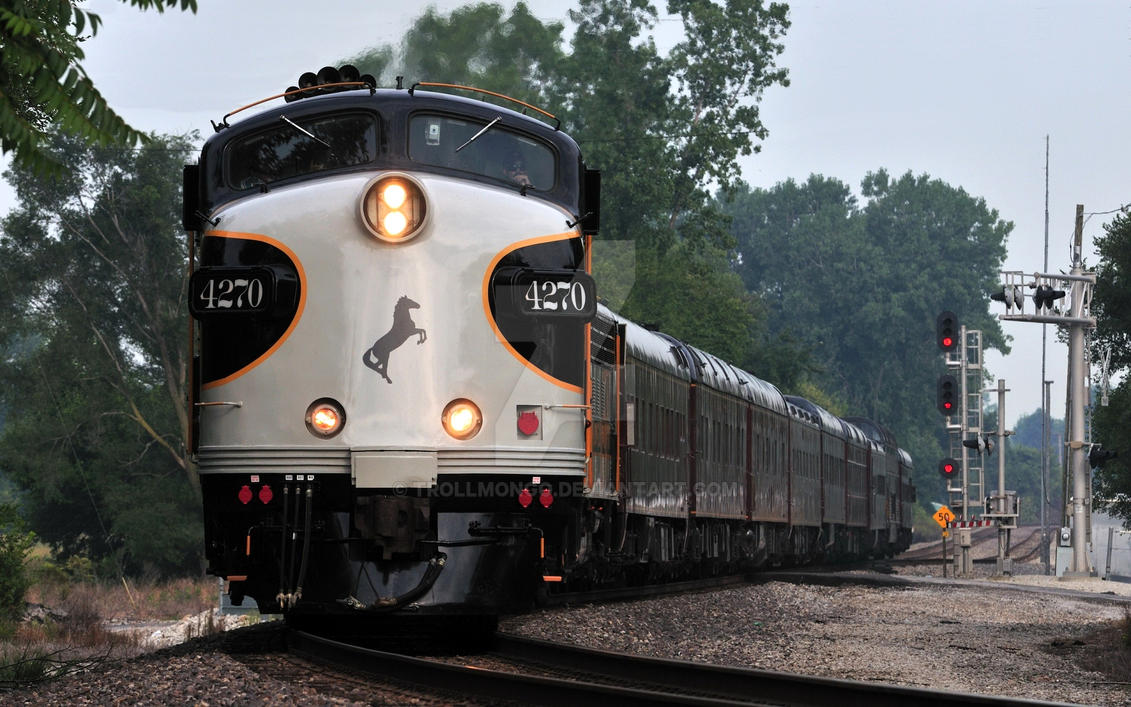
Wig Wags and more! Wigwag is the nickname given to a type of railroad grade crossing signal once common in North America, named for the pendulum-like motion it used to signal the approach of a train
Illinois Railway Museum
Some pictures from our visit to the North Carlolina Transportation Museum in September 2015.
Since we are posting about Jupiter, Florida here is a story about a train wreck at the FEC railroad bridge over the Loxahatchee River. This bridge is just west of the highway A1A bridge (which is just west of the US 1 bridge). See the link for more of the story.
"I think the train was called the FloridaSpecial, which came out of New York. It was the second section of the train...
The three sections were heading south. The first passed safely across the closed bridge and then the bridge raised. There is a single span on the north side of the bridge that points up in the air when the bridge isn't closed. We could see the sparks as from the wheels on the rails from as far away as where Tequesta Drive is today as the engineer locked his brakes. The whole thing happened like it was in slow motion. The train couldn't have been doing more than 3 or 4 miles an hour as it hit the upturned bridge span and nosed down into the water. It was fortunate that the crash happened on the side where the span was in place because it helped to stop the train."
At the inquiry, the fireman stated that "We had slowed down real good and if we had about another 150 or 200 feet we could have stopped but as it was we just kinda slud into the water."
"Was anyone hurt?" I asked.
"No, the train was going so slow at the time. The engineer replied that he been going through yellowlights all the way down the line from being close to the train sections ahead of him and had assumed that this caution light was because of the train ahead of him. By the time the red light came on to indicate the bridge was up, the brakes were already locked." One other interesting sidelight of the day's events was mentioned by Mr. White with a smile. "One of the reasons there are few pictures is that the train was loaded with wealthy men who were coming to Florida with their girlfriends. They didn't want their pictures taken. They also didn't want to wait around. They were offering to pay $100 for a ride to The Breakers in Palm Beach. I got my car and made four trips myself that day, so I made $400.
Florida East Coast Railway Historian Seth Bramson isn't so sure about the $100 per ride part of the story.
Headed to Jupiter today for lunch and to enjoy the view. When we crossed the St. Lucie River in Stuart I noticed activity on the FEC bridge. Had to stop and get a couple of pics. Not sure what they were doing exactly but they had a large crane on a barge and several workers on the bridge. Couldn't miss an opportunity for pics of railroads and boats. I still want to get a video of a train crossing there.
We went on to Jupiter Inlet about 25 miles south, grabbed an Italian sub for lunch and found a picnic table in the shade. Now for an off topic picture.
The sportfishing boat was headed out the inlet and that is the Jupiter Lighthouse behind it. The Indian River is just to the right of the lighthouse and the Jupiter and Lake Worth narrow gauge railroad northern terminus was on the same side of the river we were just to our left. That is the Loxahatchee River right in front.
A defect detector is a device used on railroads to detect axle and signal problems in passing trains. The detectors are normally integrated into the tracks
and often include sensors to detect several different kinds of problems
that could occur. Defect detectors were one invention which enabled
American railroads to eliminate the caboose at the rear of the train, as well as various station agents
stationed along the route to detect unsafe conditions. The use of
defect detectors has since spread to other overseas railroads.
Defect Detector with Audio
The photos are of the defect detector on the FEC mainline in S. Lucie County, Fl. at Walton Road, north of Jensen beach.
The audio was recorded online listening to the Broadcastify Folkston, Ga. area feed. The detector is on the dual CSX mainline mile A610.6 between Boulogne and Callahan, Fl. Listen to the end.
More information at the Trains Magazine website. Always a good source.
Several other videos on YouTube.
EDIT March 20, 2016 to add some still photos
Hotbox or Hot Bearing Detector
Dragging Equipment Detector
Laser Detector
Lasers shine down on each side of the passing train. Anything that cuts through the beam will be counted as a defect.
Control box and VHF Antenna
Overview of hotbox and dragging equipment detectors with one leg of bridge that holds laser detectors.